Where we agreed
6 ratings; average 2.75/5. Standard deviation: 0.90.
September 2026 selection
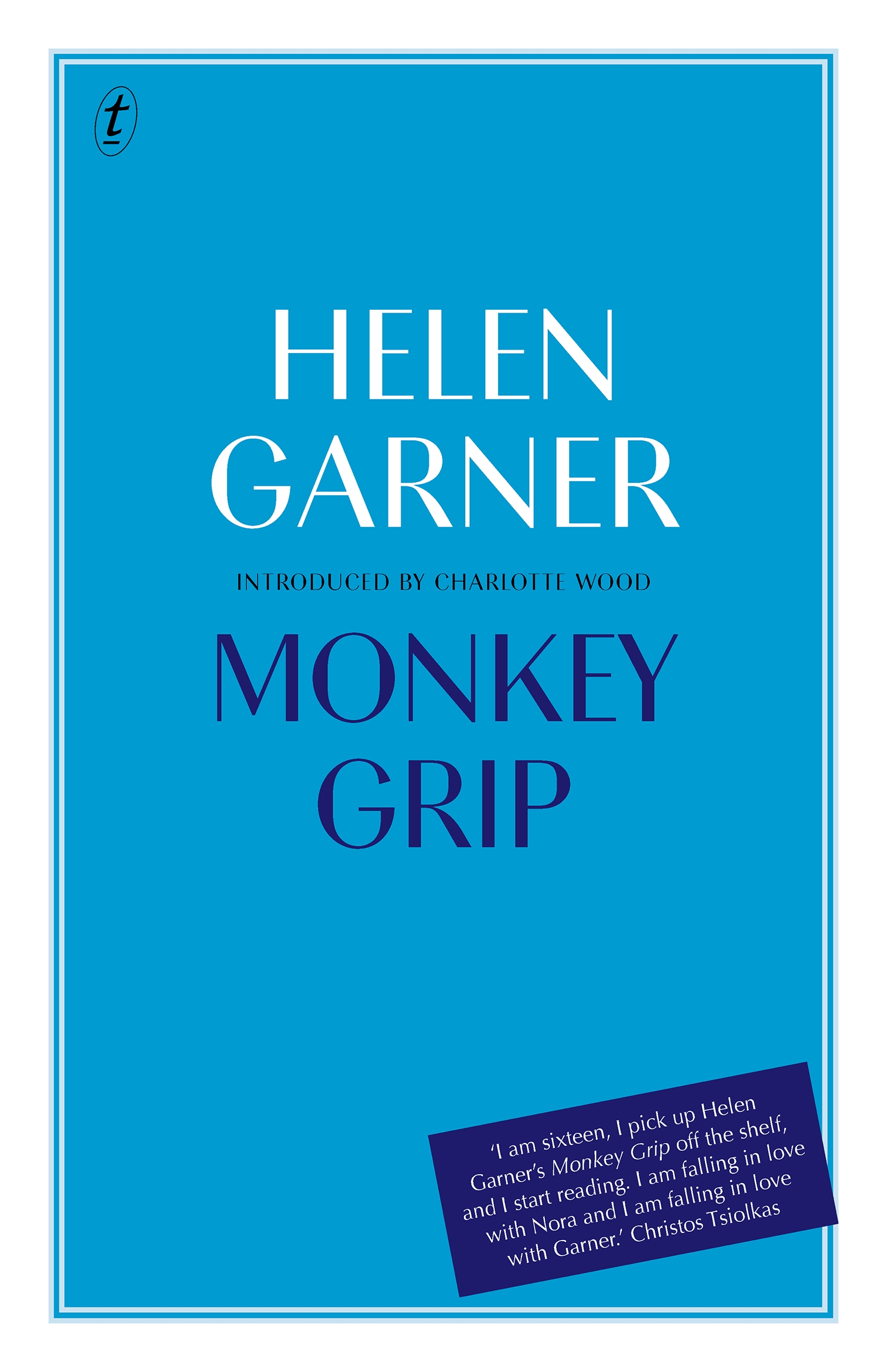
Alec's September selection is Helen Garner's first novel, a portrait of communal life in 1970s Melbourne and Nora's consuming relationship with the heroin-addicted Javo.
Club summary
Love, addiction and communal life collide in 1970s Melbourne.
Alec's September selection met on Sunday 11 October 2026. 6 recorded scores gave a final club average of 2.75/5.
6 ratings; average 2.75/5. Standard deviation: 0.90.
Alec went highest at 4/5; Josh went lowest at 1/5. Range: 3.0 stars.
8 ballots
I’ve learnt that beloved Alec (SpaceHog) has a type of book. I have a certain nostalgia to content make about and in Australia, however this grungy Melbourne 70-80s drug/junkie lifestyle is not one I can relate to. I can completely understand why it was so divisive when it came out. The doomed monkey grip that comes out of the two leads is interesting, but I can’t understand Nora’s undying commitment to the junky. I found it doesn’t really have anything to say, and the story just prattles along with no real monkey grip to keep me invested. It gets extra points for naming dropping Sydney locations
Would recommend: No.
I really enjoyed Monkey Grip. I enjoy Garner's writing style though this is the first novel of hers I have read. Her style almost feels like a female Hemingway which I think worked well for this book. The book itself is obviously super evocative of Aussie summer and listless youth which I enjoyed but that may be because I've been away for so long. I thought the characters were endearing despite their complete fucked-upness and I liked how casual everyone was about pretty much everything including swapping partners, drugs, going to Tasmania all the time for some reason etc. I found it quite moving despite not a whole lot happening. The only thing I knocked it down for was how circular/repetitive it felt at times (which I gather is the point but still) and I found some of the characters and their backgrounds hard to follow. All in all I really enjoyed it.
Would recommend: Yes.
This book was not for me. Conceptually I can see the author was going for some kind of 70's Melbourne period piece exploring the human condition of a specific subculture, but it just failed to grab me in any way. There's no real plot beyond the mundane happenings of Nora and her circles lives, so the book lives or dies by the characters and the prose. I felt no connection to any of the characters, and none have any real character development or redeeming qualities.Nora is a hopeless romantic and Javo a junkie lost cause. They both act in inexplicable ways and make choices that I didn't understand. Perhaps the only character I did care for was Gracie, but she's hardly explored. And the prose is pretentious and dense for no real return. This was a battle to read from start to end, and the book largely felt like a constant repetition of the same events over and again (how many times can I bear to read about Nora and javo and their dysfunctional toxic relationship). I would not recommend this book to anyone.
Would recommend: No.
This has definitely been the book I struggled the most to place so far. When I first started reading it, I found Garner’s prose lovely, and fell away into this summer in 1970s Melbourne. Then came the Javo. The next 100 or so pages were just a Sisyphean nightmare of one woman’s desperate attempts to be loved by a junkie loser who wouldn’t give her the time of day. I found it tiring and frustrating to slog through pages upon pages of Nora obsessing over his blue eyes while he stole money and shot up. I suppose that’s the point of the monkey grip: he’s got her completely dead to rights and she can’t escape. But that doesn’t make it easier to get through, despite the beauty of Garner’s prose. The book was apparently based on her diary, with names changed and some elements added, and you can definitely tell. It’s an odd book - it doesn’t have much of a central narrative, beyond the summer that Nora was whipped to a junkie, and even that ebbs and flows throughout. As a series of vignettes about life as a bohemian in Melbourne, I found it quite engaging - there is something appealing about the carefree life of bumming around from share house to share house, heading to clubs and bars to dance and drink into the early hours of the day, without any care or worry. Having said that, intentionally or not, the book really highlighted to me the moral emptiness and patheticness of it all; every character in this book is frankly a loser. Nora is a 30 year old single mother pining after a junkie who will never change, Javo is a deadbeat drug addict trapped in a spiral he shows little effort to meaningfully break from, and the revolving gang of losers they associate with were as generic as they were lame. I don’t think a book has ever come across as such a damning treatise against polyamory - despite trying to indulge in ‘free love’, every character is beset by jealousy, insecurity and frustrated loathing at the sharing, feelings that are only redoubled by their own shame at betraying their values. Angela is the purest character in the novel - she articulates her frustration at Willy for cheating on her with Rita, hating them both, while Nora is trapped in a mind palace of loathing Claire while hating herself for her feelings. I saw a review talk about how you can either read their life as having a certain ‘childlike innocence’ or ‘narcissistic oblivion’ - I am definitely on the oblivion side of the fence. I did like the frequent random trips to Tasmania, as well as Nora’s Christmas travel to her family - she makes a snide comment about how her uncle, part of the landed gentry, are exploitative, which may be true but felt rich coming from the woman who was freely exploited by Javo on every page of the book and never once pushed back. I’m not sure how to take the feminist overtures of the book; Nora shows flashes of being self-aware, but then goes immediately back to her knees helping Gerard do his pants or get Javo his cigarettes. It also goes without saying that she’s a pretty terrible parent - letting Javo shoot up heroin in the same room as her small child, taking her out late to bars and pubs, fucking strange men in the same room. I suppose Nora’s love for Javo is as obsessive and destructive as Javo’s love for dope, but the fact we never really understand Javo kind of took me away from that - the book is trapped in Nora’s frankly neurotic mind, so you never really understand why Javo is as empty as he is. Again, that’s probably the point, and it highlights the distance that Nora and he have, but I struggled to really care about why he was a sad heroin addict, particularly after the 15th time that he had stolen rent or acted like a jerk to everyone around him. Oh, but he’s a junkie! We must show compassion to others, even when they use and abuse you! Being trapped in Nora’s mind really made me quite upset, and while it’s interesting hearing her reflections on love and sex and companionship the first time, by the 300th page I’d had enough. It’s not like her viewpoint really changes - she starts the book just as let down by the men in her life as by the end, just as incapable of articulating her own role in her destruction (or perhaps refusing to). It’s tiresome. All in all this was a difficult book to finish and a difficult book to reflect on. I liked the slice-of-life perspective of this forgotten summer of youth in a world that doesn’t and can’t exist anymore, I found the writing and prose to be beautiful throughout, and I’m partial to the structure of Nora’s thoughts, for a time. But I hated every character, found Nora a frustrating character to live in, and found the book overlong.
Would recommend: Yes.
I agree with parts of Alecs and Josh’s. Beautifully written and the prose was good, really like when authors have the ability to artistically capture the mundane and everyday in ways. It was a very good snapshot of a time and place and subculture. The fact that it is very clearly just her diary with the names changed and there was a lack of coherent narrative, all the hallmarks of a story it didn’t follow. This made it hard to delve into, it wasn’t a page turner. It’s interesting because it’s diaristic, all the characters didnt serve a purpose, you didn’t know anything about them or backstory, it was impossible to know who was who half the time. A the book goes on, people just enter and leave, I didn’t know who was who and I didn’t care about them. I felt very sorry for the child Gracie and thinks its crazy that she thinks about these crazy topics. Wasn’t sure who was looking after the kids. It’s mentioned like once but unclear how they were working or making money. Wasn’t sure that dope was heroin, thought it was weed, was quite confused. Had to google the I Ching. I was really holding out for a bit of closure. Doesn’t mind a book where nothing happens if there is an interesting character study, there was a bit of that in her internal battle between her mothering instincts and her addiction that mirror Javo’d. Was definitely well written and an interesting insight. It just didn’t grab me. I would be interesting to read more of hers. I agree with Josh’s hangups but did think there was some quality to be found, it was kind of beautiful in a way. It could have been a short story.
Would recommend: With caveats.
I had read Garner before in school and found her book kind of mid, but it was quite a while ago. Found her writing quite pretentious. Immediately after starting Monkey Grip it felt like she was larping. She is just totally faking an element of this lifestyle. Which I found crazy cause she was writing it from her real life experiences. Found the prose fundamentally hollow. The way she talks about non-monogamy and drugs is crazy. I found the characters are limited, barely even described. Nothing feels described in this book. Hated how she would say hello. Hated the way they would talk about fucking - least favourite part of the book. However, did find it easy to sync into the vibe of the bohemian lifestyle. Did not understand why Nora liked Javo at any point. Everyone lives the grungy lifestyle but none of them are that bad apart from a bit of theft. I felt the book was willing to go into this grungy world but not willing to be realistic. Couldn’t separate how horrific the child's life is. Finished it and thought ‘Helen Garner is not for me’. Did keep reminding me that this was written in the 1970s and there is a lot of hypocrisy in their lifestyle and politics. It is somewhat unexplained where these people get their views on politics. However, the more I have sat with it the more I have thought about it and how comfortable and easy it was to read. While some of the prose was hollow this does make me think I had to ponder about it a bit. When we read Bunny Munroe and I had lots of negative ratings. Ever since I have thought about it a lot and it's grown on me a bit. Feel a bit similar with this book.
Would recommend: With caveats.
No questionnaire answers recorded.
Read about a third about it. I’m more Josh leaning in my stance. It’s a shame - I think the subject matter is interesting; relationships you know are toxic, enough insight to know that it isn’t right but can’t change. The cycle of substance abuse. I could not bring myself to read it. I struggled enough with it. Demon Copperhead exploreed some similar themes but I really enjoyed it unlike this book. I shared a lot of thoughts about Josh’s review. Didn’t feel connected to any of the characters. Blue eye count off the charts.